My Gear
The kit I actually use — cameras, boots, and the few bits that come on every walk.
Do you need the latest and greatest high-spec camera gear for your photography? Unless you’re a professional photographer, I’d say no.
Speaking from experience — and you may agree or disagree — I’ve been there, done that, got the t-shirt. I’ve lugged camera bags stuffed with bodies and lenses up mountains, only to find I probably didn’t use a quarter of it. I’ve owned full-frame, APS-C and Micro Four Thirds cameras packed with specs and functions, and most of it was massive overkill. Half the features never got touched.
Over the years I’ve slowly stripped things back, now preferring lightweight portability over a bad back.
That said, my main camera setup these days is a bit of an odd one by modern standards.
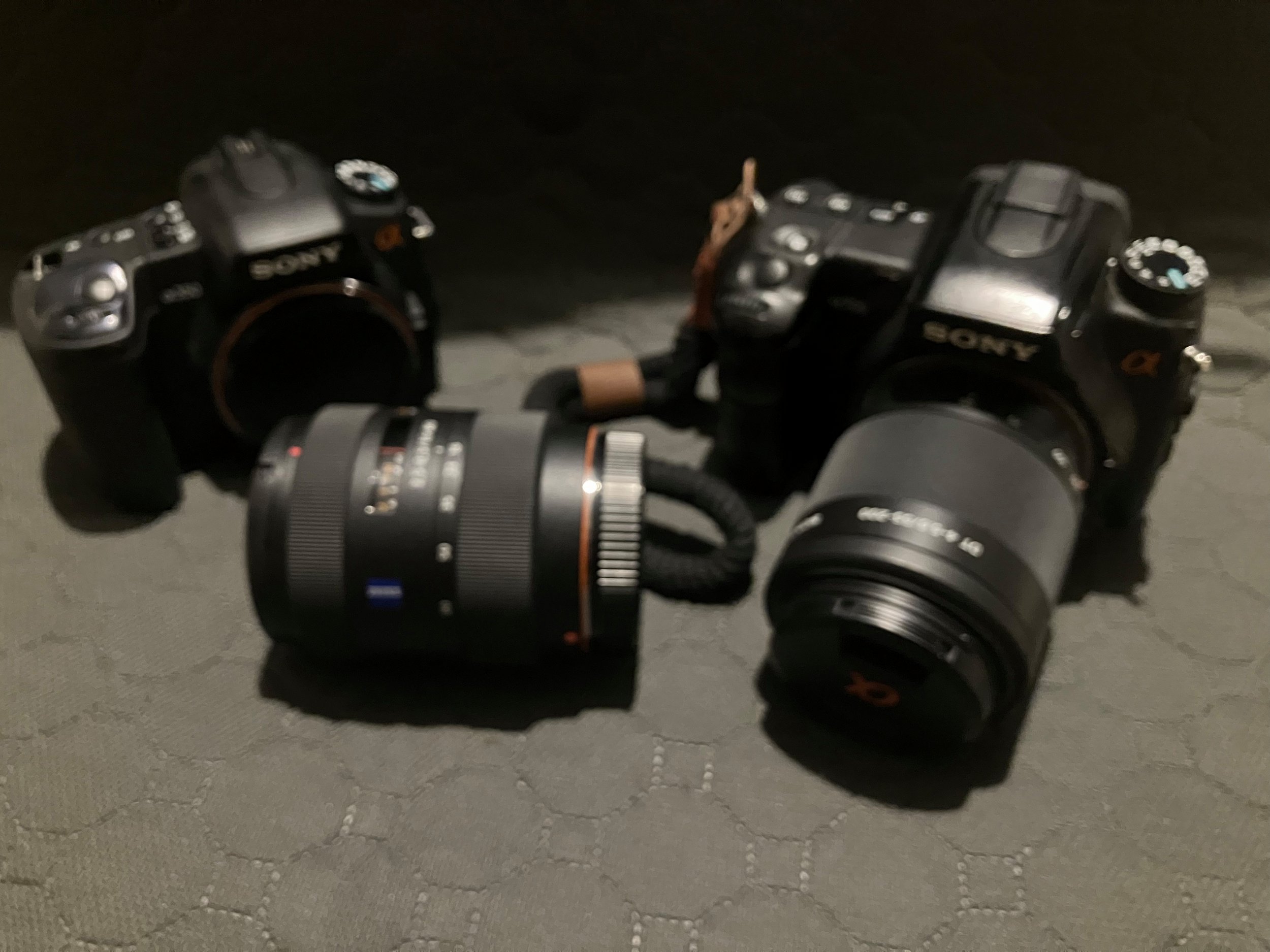
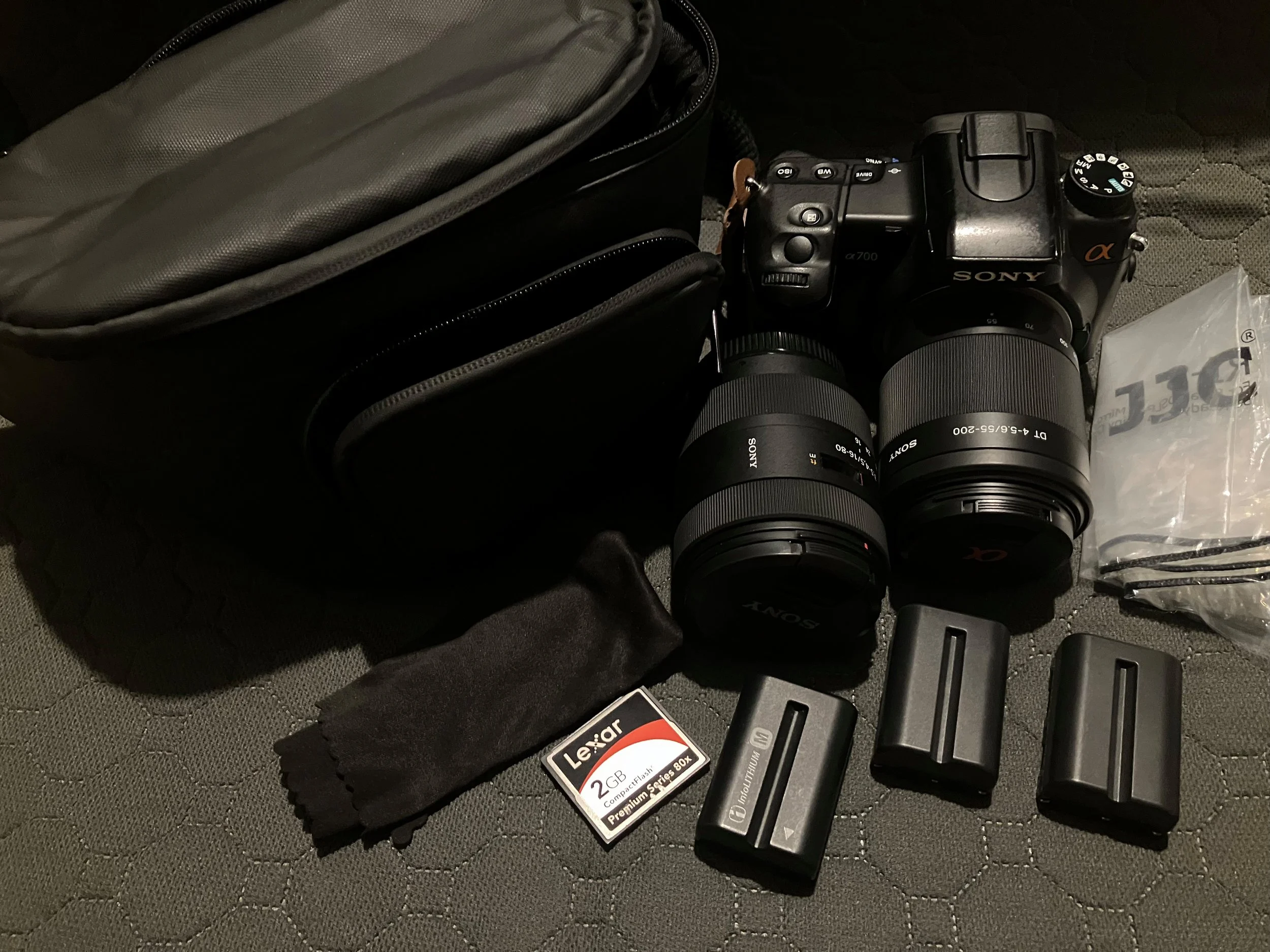
I now shoot primarily with a pair of older Sony A-mount DSLRs: the A350 (2008) and the A700 (2007), usually paired with the Zeiss 16–80 and Sony 55–200. They’re both APS-C cameras, one with a CCD sensor (A350) and one with a CMOS sensor (A700), which gives me two slightly different takes on the same landscape while still sharing the same lenses and batteries.
I’m not chasing clinical sharpness or technical perfection — I want character and consistency. I shoot them much the same way I used to shoot my film SLRs, working deliberately and committing to the look in-camera by shooting black-and-white JPEGs only, no RAW safety net. The A700’s “Superfine” JPEG setting and better viewfinder make it a solid choice for book and print work, while the A350 still has a look I enjoy, especially in certain conditions.
The results have a texture and tonality that feel closer to the way the landscape actually looks and feels when you’re walking through it — imperfect, weathered, and honest. For my kind of photography, that matters far more than specs or resolution charts.
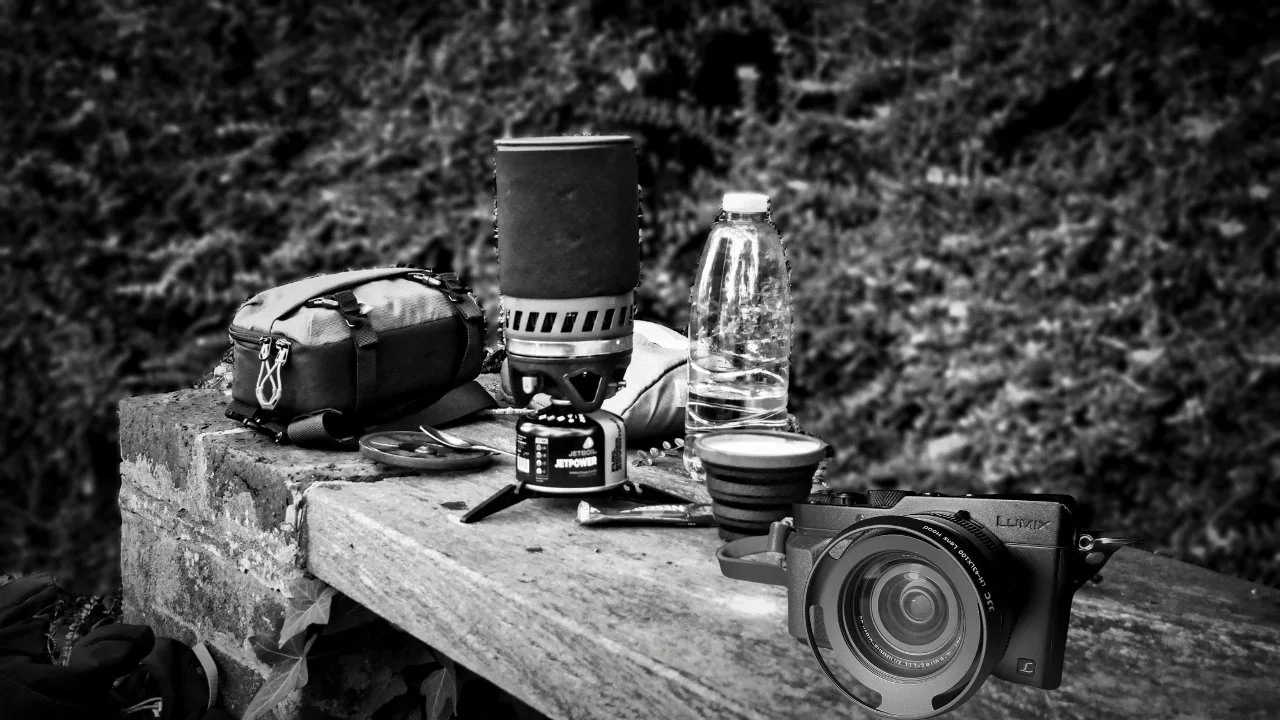
Alongside that, I still keep things light when I want to. Over the last few years I’ve spent time with a few older premium compact digital cameras — the Olympus XZ-2 and Leica X2 — and they reminded me how enjoyable simple cameras can be. These days though, I’ve committed fully to the Sony A-mount setup rather than juggling too many systems. One set of lenses, two bodies, and that’s enough.
I like minimal cameras with tactile buttons and dials, so I’m not forever diving into menus. The A350 and A700 both have that older DSLR feel that suits me — clear viewfinders, straightforward controls, and just enough options to get the job done without turning every walk into a menu exercise. Someone once said it’s not the camera full of specs you’ll pick up, it’s the one that appeals to you — and there’s a lot of truth in that.
Although I’ve now got rid of a lot of it, I still shoot film from time to time. There’s something about the process that keeps you grounded — slower, more deliberate, and no instant playback. I still have a Nikon L35AD and an old Box Brownie I use now and then, mainly for the experience rather than perfection. The results always have a certain honesty to them.
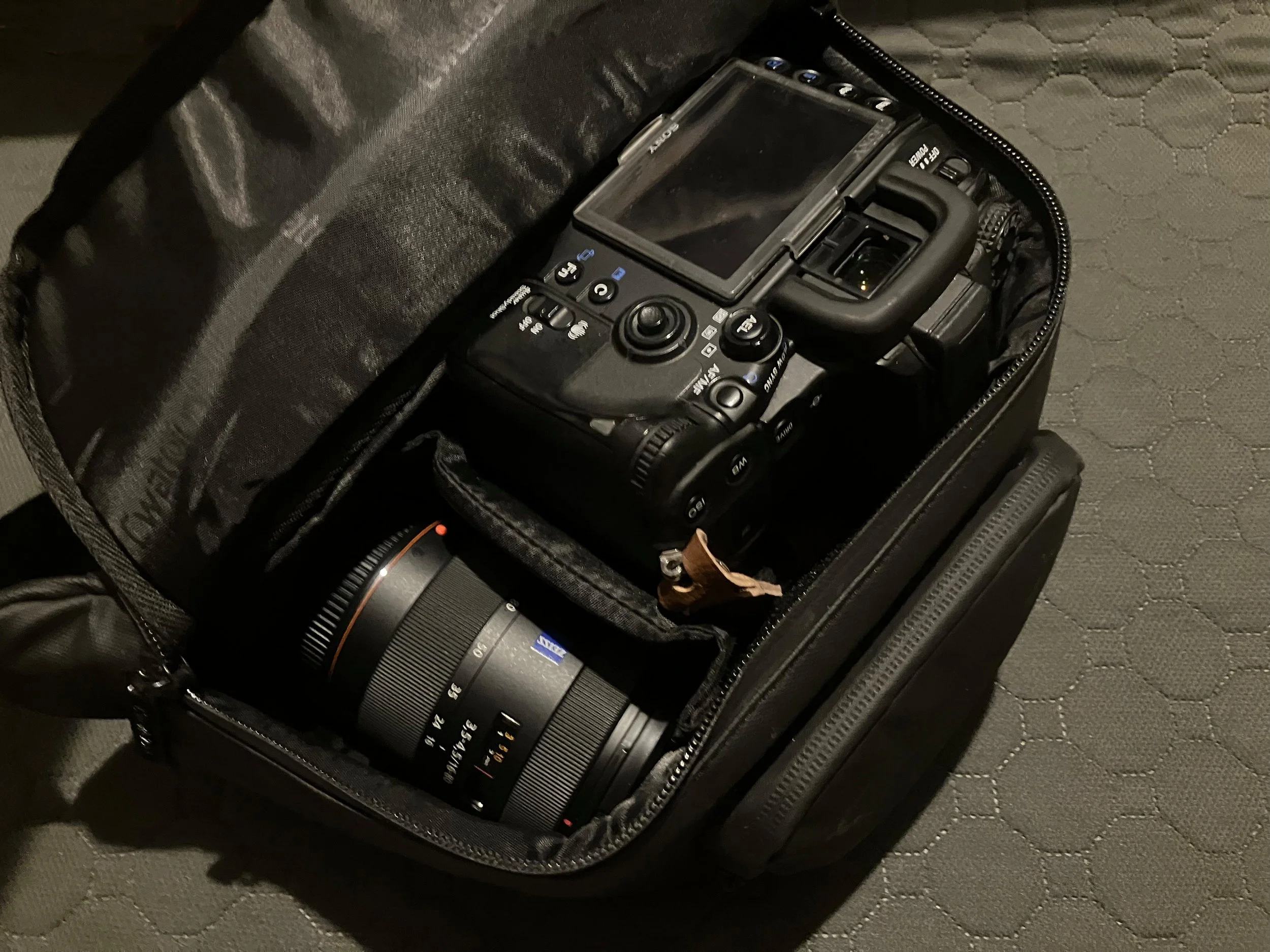
My setup on the walk is simple: the camera I’ve chosen for the day, a small Lowepro hip bag, a few spare batteries, and occasionally a diffusion filter for softer highlights. Nothing fancy. If it doesn’t fit in the bag, it doesn’t come.
We don’t all have deep pockets — me included — so there’s no need to feel pressure to own the latest gear. If you want to spend your money wisely, invest in good quality lenses for whatever system you already use. Better camera bodies don’t make better photographs; they just make parts of the process quicker or easier. There’s nearly always a workaround if you take the time to learn your camera and how it behaves.
And since most of my photography happens while walking, the same idea carries over to what I wear and carry. My current walking boots are Skechers Relment Pelmo — £65 from Amazon — with built-in air-cooled memory-foam insoles. For the money, they’re the most comfortable and waterproof boots I’ve owned. My wet-weather and walking trousers are from Craghoppers, my down jacket is from Rab, and I cook on an OEX stove — similar to a Jetboil but half the price and just as good. Everything goes into a reliable Berghaus day sack — just a few items from my cache of hiking and camping kit.
With hiking and camping equipment I tend to buy the best I can afford, and the biggest thing for me is staying comfortable and dry. For navigation I mostly use my phone with an OS Maps subscription, but I always carry at least one power bank. On longer hikes, especially somewhere unfamiliar, I still go old-school with an OS weatherproof map and compass as backup.
Everything I carry has to earn its place. I walk a lot, often for hours, so weight and practicality always win. The setup I’ve settled on works for me and lets me focus on what I’m really out there for — the walk itself, and the photographs that come with it.
The less I carry, the more I see.