More Than a Pretty Picture
Sure, we all like an image that looks good. A photograph that is technically proficient, well-lit, and immediately pleasing to the eye is a simple joy. But what separates the merely “pretty picture” from the truly captivating one? The images that endure and resonate—the ones we save, print, and revisit—do so because they fulfil a deeper purpose. They are a mix of craft, emotion, and connection.
The journey of an image from a fleeting moment to a lasting memory involves far more than just clicking a shutter. It’s a conscious act of seeing and conveying meaning. The elements you’ve noted—composition, subject, colour, emotion—aren’t separate ingredients; they are interwoven threads forming the tapestry of a compelling visual story.
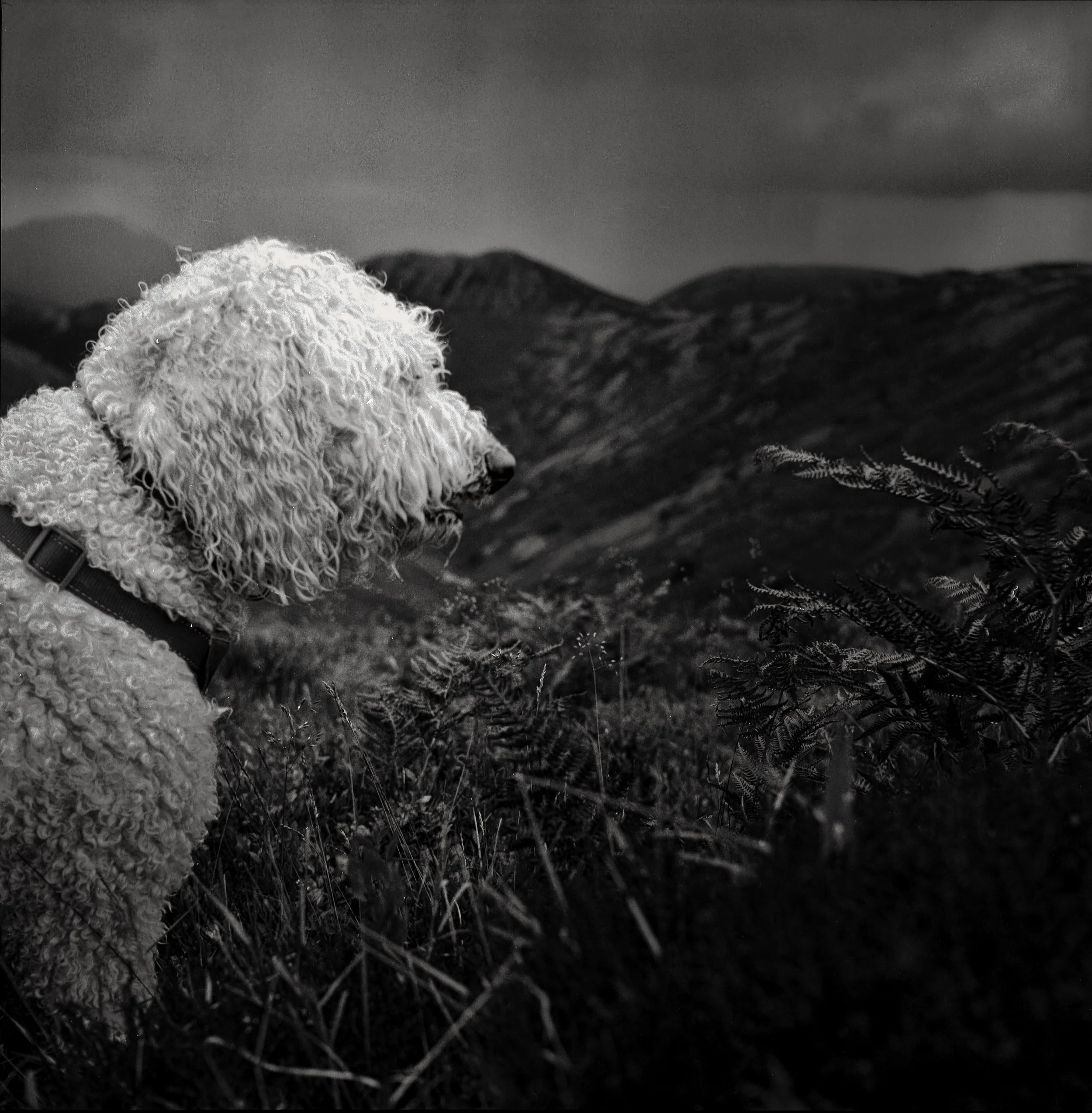
Elvis soaking up a Shropshire hailstorm—sometimes a photo is about mood as much as the landscape, and yes, Elvis was in a bad mood!
Composition and Subject
At the most basic level, a “good image” appeals to our sense of visual order. Composition is the framework that guides the viewer’s eye, transforming a chaotic scene into an organised narrative. Rules like the Rule of Thirds, leading lines, and negative space aren’t rigid commands; they are guides that help create balance, tension, and visual harmony. At the same time, knowing when and how to bend or break them can lead to unexpected, compelling results. When a composition is strong, the image feels resolved and intentional. It draws the viewer in and directs them toward exactly what should resonate.
A resonant subject is the beating heart of the photograph. It elevates a picture from a generic scene to a specific, memorable moment. It might be the raw vulnerability of a portrait, the quiet drama of a landscape, or the decisive instant of a street scene. The best subjects tap into universal human experiences—joy, sorrow, wonder, connection. When a photographer captures a subject that truly resonates, they’re not just documenting; they’re making a statement about the world and our place within it. Without resonance, the prettiest composition remains cold; with it, even an imperfect photograph can become iconic.
Colour and Black & White
The decision to use colour or monochrome is one of the most profound choices a photographer makes. It fundamentally shapes how an image feels, and it should be made with intention—not as a way to rescue a poorly shot colour image.
Colour photography offers a direct, vibrant link to reality. A specific palette—the warm glow of sunset, the cool blues of a winter morning, or the clash of complementary hues—immediately sets the mood. Colour is sensory information; it communicates temperature, time of day, and atmosphere. Skilled use of colour enhances the narrative by guiding where the eye goes and how the viewer reacts, triggering responses like excitement, calm, or even unease.
Black and white, on the other hand, is an act of distillation. Removing colour strips away distraction, forcing attention toward texture, form, light, and shadow. It often lends a timeless, dramatic quality, revealing the emotional structure of the image with stark clarity. Monochrome pushes the photograph into the realm of the universal. It exposes the true core of the subject, making it a powerful way to explore deeper themes and heightened feeling—but only when it is chosen deliberately, rather than applied as a quick fix.
The Ones That Make You Pause
Ultimately, the true measure of a photograph lies in its ability to provoke an emotional response. How does it make us feel? This is the bridge between a simple depiction and a piece of art.
Some images stop us in our tracks. They possess a magnetic pull—through drama, beauty, or strangeness. These photographs disrupt the flow of our day, forcing us to pause and absorb what we’re seeing. They become a brief escape, or a confrontation with something unexpected.
Most images, though, are overlooked. They may be competent, even attractive, but they fail to break through the flood of other images. They lack the emotional hook or unique perspective needed to seize and hold attention. They are “pretty pictures” without a soul.
The difference lies in a photographer’s willingness to look deeper—to push past the obvious. It requires technical skill, yes, but also empathy and personal perspective. It’s the ability to find the profound inside the everyday.
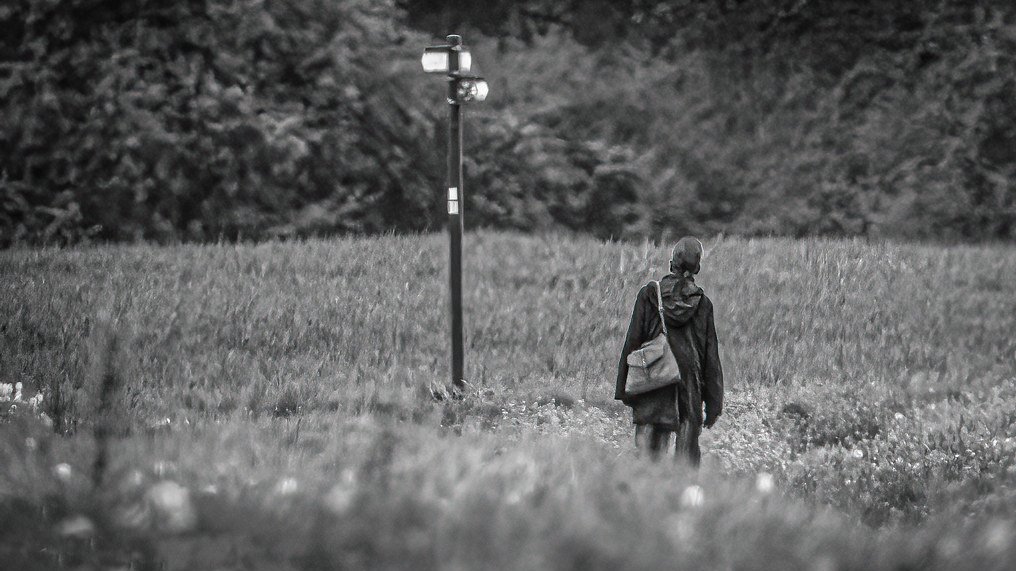
Sometimes a photograph doesn’t give answers, it asks questions—where has she come from, where is she going?
Being Honest With the Frame
If a good image is a conversation, the photographer is the one who initiates it. This act comes with a profound, often overlooked responsibility. The camera is not a neutral recorder of fact; it is a powerful tool of selection, exclusion, and emphasis. Every decision—what to include, what to crop, when to press the shutter—is a creative choice that shapes the narrative and defines the viewer’s truth.
The lasting image must, therefore, wrestle with authenticity. Is the photographer documenting reality, or constructing a version of it? While manipulation and post-processing are integral to the craft, the ethical line is drawn at the point where enhancement becomes deception. In today’s world, with AI capable of generating images that look convincingly real, the photographer’s commitment to authenticity has become even more important. It’s not just about creating a pleasing picture; it’s about capturing something that genuinely happened, that carries the weight of reality, and the respect owed to the subject.
An image that really resonates feels true; one that’s made up or faked quickly becomes forgettable—or worse, misleading. The photograph that lasts is often one that is honest about the moment, even if that moment is messy, unpolished, or incomplete. It avoids the temptation to sanitise or sentimentalise human experience, opting instead for a clear-eyed depiction that allows the complexity of the subject to speak for itself.
Furthermore, the photographer has a responsibility to their subject. This is particularly critical in portraiture and photojournalism, where the photographer holds power over the subject’s representation. To capture the ‘raw vulnerability’ mentioned earlier is a privilege that demands empathy and respect. An image becomes exploitative when it uses a subject's suffering or difference merely to provoke a shallow emotional response from the viewer or to advance the photographer's personal glory, rather than to inform or elevate.
The truly responsible photograph aims to restore a measure of dignity to the subject, ensuring the viewer sees a human being first, and a spectacle second. This ethical grounding is the unseen scaffolding of the most powerful and important images in history, lending them a moral gravity that a merely 'pretty' scene can never possess. The photograph endures not just because it looks good, but because it feels right, rooted in a fundamental respect for the narrative it presents. The depth of that respect is what separates a masterful storyteller from a casual observer.
Memory, Emotion, and Connection
A photograph means more to some than to others because its impact is deeply personal. It operates on three interconnected emotional layers.
Emotion is the immediate reaction—awe, sympathy, amusement, wonder. The best photographs allow for emotional complexity, mirroring the layered nature of human experience. They freeze the raw feeling of the moment for us to examine.
For the person who created the image—or the person within it—photographs also hold memory. They instantly transport us back to the sights, sounds, and sensations of that moment. A simple snapshot of a childhood street becomes a record of years of life lived there, where personal history and visual evidence collide.
Beyond memory, photographs serve as reminders. A reminder of what we value, what we’ve lived through, what we’ve lost, or what we hope to protect. A landscape can remind us of nature’s fragility; a historical image can remind us of sacrifice; a portrait can remind us of connection. These reminders guide our perspective and reinforce what matters.
Making Images Last
Living in an era of social media, we’re surrounded by an endless stream of images, all vying for likes, comments, and instant attention. The original purpose of a photograph—to hold memory and serve as a tangible reminder—is often lost in this rush. A print might not get the same immediate recognition online, but taking it off the glowing screen gives it permanence, weight, and a different kind of presence—a chance to be seen, felt, and remembered in a quieter, more lasting way.
These days, a photograph’s journey often ends seconds after it’s taken, stuck on a hard drive or forgotten in a feed. To make an image that truly lasts now, a photographer has to be intentional. It’s not enough to simply notice the moment—you need to shape it so it carries weight, grabs attention, and stays with the viewer. That might mean leaning harder into your perspective, trusting your instincts, and making sure the composition and subject are strong enough to stop someone mid-scroll.
This is why physical prints still matter. A print is a commitment. It’s a conscious choice to give a photograph permanence, materiality, and presence. Taking it off the screen and putting it on paper forces a different kind of engagement—slower, more thoughtful, more personal. A print becomes a final statement, a completed journey of the image. It’s a way to resist the flood of fleeting visuals and make something that can be revisited, touched, and passed on. Whether in an album or framed on a wall, the print gives the image a presence that no screen can match, letting it truly be more than a pretty picture.

When a photograph becomes a print, it becomes part of everyday life—carrying memory, place, and connection.”
Beyond the Moment
The moment a photograph leaves your hands, it takes on a life of its own. How it’s received, remembered, and interpreted isn’t up to the photographer—it’s shaped by everyone who encounters it. That’s the deepest power of an image: it can be shared and personal at the same time. You provide the context, but each viewer brings their own experiences, emotions, and perspective to the picture.
Because of this, the meaning of a photograph is never fixed. It shifts with time, with culture, and with the people who see it. A historical photo might resonate differently decades later. A portrait of someone once famous can become a quiet reminder of struggles, loss, or change. The truth in a strong image isn’t simple; it’s an open question, evolving with each generation, reflecting the complexity of life itself.
A photograph that truly matters leaves a mark both culturally and personally. It becomes part of our collective memory, a shorthand for a moment, an emotion, or a place. For the individual, it continues to remind, to trigger memory, to hold feeling. Over time, its weight can even grow, offering a portal to the past, a moment of escape, or a confrontation with something enduring. A pretty picture is glanced at; a good image stays with you. It lives quietly alongside your own story, a lasting participant in the ongoing narrative of life.
Conclusion
So, what makes a good image?
It isn’t simply an image that looks good. A good image is technically sound enough not to distract from its purpose, but its true power lies in communication.
A good image is intentional—every choice from framing to focus serves a purpose. It’s emotional—it stirs something active, something complex. It’s resonant—it connects a specific subject to a universal truth. And it’s memorable—it has the strength to stop us, linger with us, and become a reminder long after we’ve looked away.
A pretty picture is decoration; a good image is a conversation—and it’s one we live with, long after the moment has passed. It engages us, challenges us, and reveals something about the world and ourselves. It becomes a portal to emotion, memory, and deeper understanding—proving that its value is truly more than a pretty picture.