Walking As We Get Older
A Quiet Shift With the Passing Years
There’s a quiet wisdom that comes with the years, a gentle realisation that the person you are today is not the person you were yesterday, or two decades ago. This truth is perhaps never more apparent than when you lace up a pair of walking boots. For those of us who found our freedom and challenge on the trails in our younger days, the experience of “getting out there” inevitably changes. The competitive fire of youth mellows into a reflective glow, and the goal shifts from conquering miles to simply being present for them.
I'm in my mid-50s now, and my partner is just touching 60. We've enjoyed a lifetime of activity, but we’re at that stage where we find we can’t quite do the same things we did when we were younger. The body, it turns out, keeps a meticulous ledger of all those miles, the steep ascents, and the occasional jarring descent. What was once effortless now requires a bit more thought and preparation. The recovery time is longer, and a misstep that once brushed off now whispers a warning of potential injuries. My mind, bless its enthusiastic heart, still says, “Hell yeah, let's do this!” but the body often has other, more sensible ideas.
Earlier Miles
My formative walking years were spent in Herefordshire on the Welsh Border. I lived there for quite some time before I met my partner and moved to be with her in Buckinghamshire. In my 20s and 30s, almost all my spare time was dedicated to the Black Mountains and the rugged Brecon Beacons. I would think very little about hiking 25 or 30 miles up and down peaks and ridgelines. I was always pushing that little bit further, always seeking a new challenge. The effort was constant, and it was simply what I did.
It’s a powerful thing, that memory of peak fitness. But as we get older, we soon realise we’re not that person anymore. The shift is subtle at first — a stiffness in the knees, a slight hesitation on a rocky descent — but it becomes undeniable. The paths remain, but the way I walk them has changed.
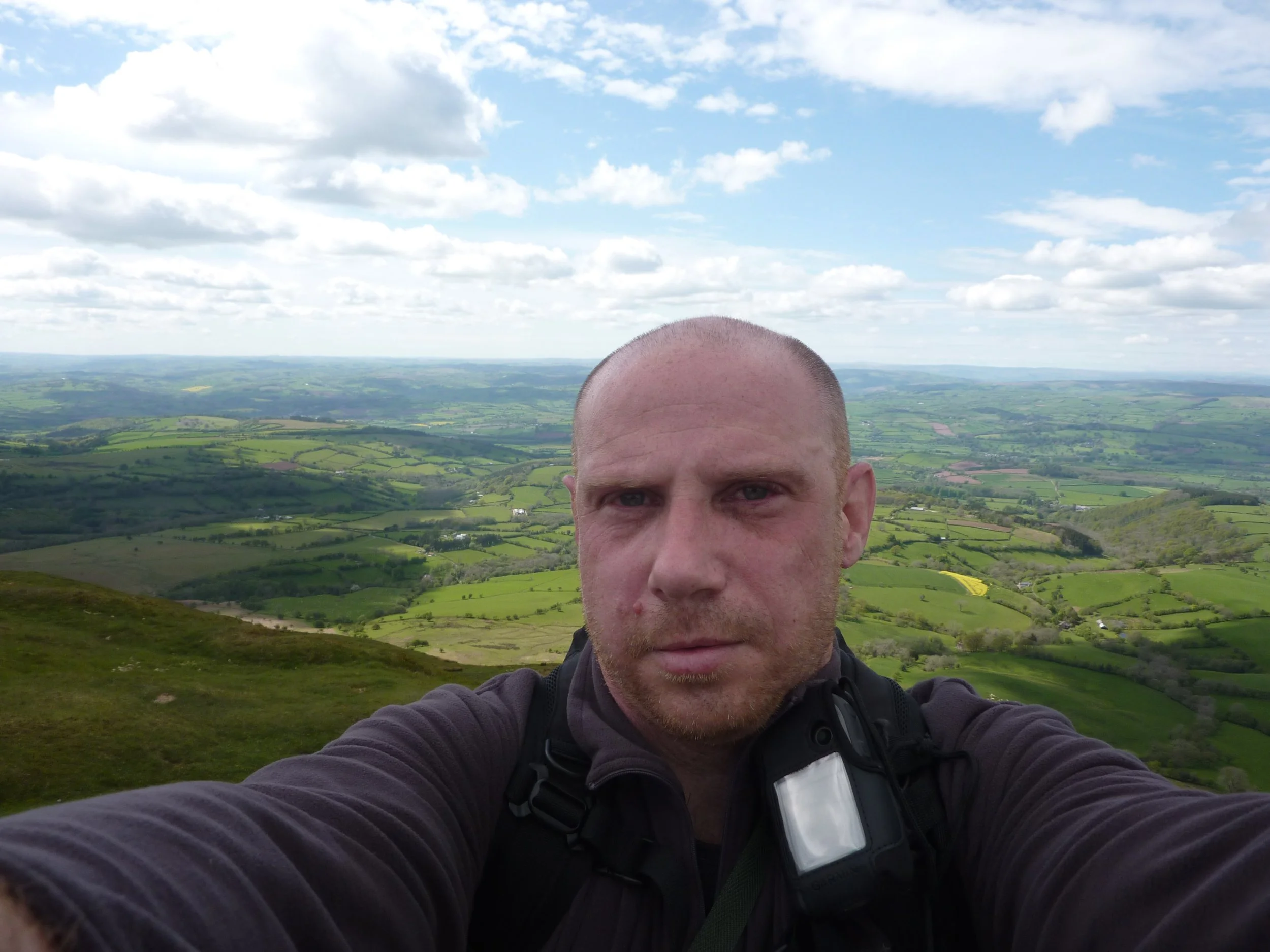
A very younger me, up in the Black Mountains, Wales.
The Redefinition of a Good Walk
What becomes clear as you get older, is the discovery of a richer, more sustainable joy. I can still walk a good 20 miles or so, but the terrain has to be a bit more friendly now. I’m done with scrambling up scree slopes just to tick a box. For me, it's about hitting a good rhythm and pace and just keeping going.
The walk now is fundamentally different. It's no longer about the miles; it's about the moments. It is about being outside in nature, truly enjoying my surroundings, and doing photography along the way. I slow down. I take my time. I just enjoy myself. I no longer feel the need to beat this time, or do more miles, or walk a higher peak. The external measurement of success has been replaced by an internal one: a feeling of peace, of connection, and of simple, unhurried pleasure, I cover less ground now, but I notice far more of it.
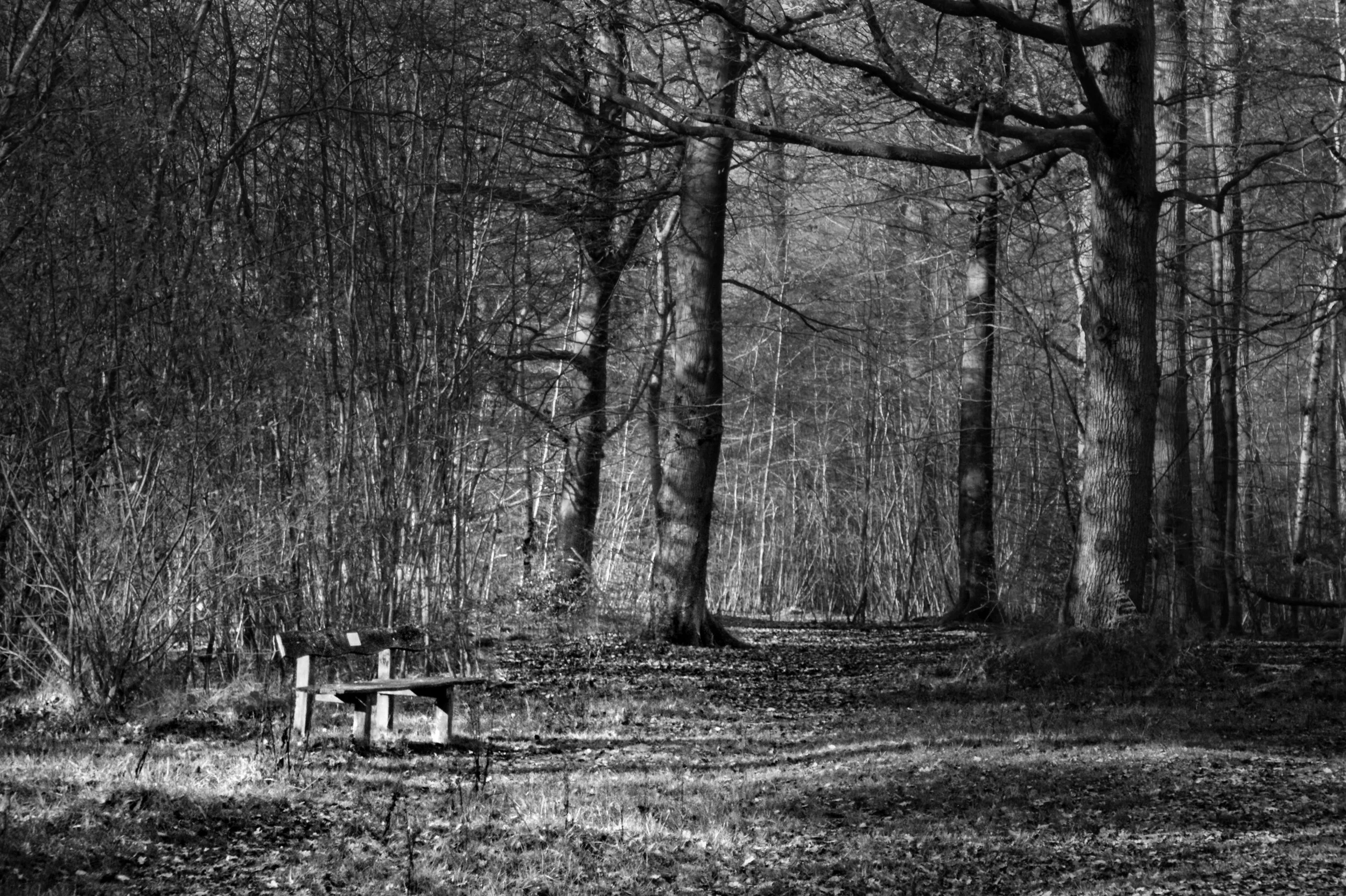
A slower Woodland pace.
A Different Headspace
Walking has become a deeply meditative act. When you’re focused purely on endurance, the mind is filled with instructions: breathe deeper, push harder, check the time, watch the footfall. But when the pressure to perform is removed, the mind is free to roam, reflect, and absorb.
The Sounds: I notice the rustle of the leaves, the distant call of a bird, the crunch of gravel underfoot. The noise of ambition is replaced by the chorus of the natural world.
What I Notice: Photography forces a stop. It demands that I see the small details: the moss on an old stone wall, the way the light catches a spider’s web, the intricate pattern of tree bark. These are the moments I used to miss in my haste.
The Breathing: The steady, unforced rhythm of breathing and footsteps becomes an anchor. It’s a physical manifestation of mindfulness — the body is working, but the mind is settled, observing without judgement.
For a few hours, the usual noise of life fades into the background. It's a natural therapy, it’s time spent where the only thing that truly matters is the next step and the horizon ahead.
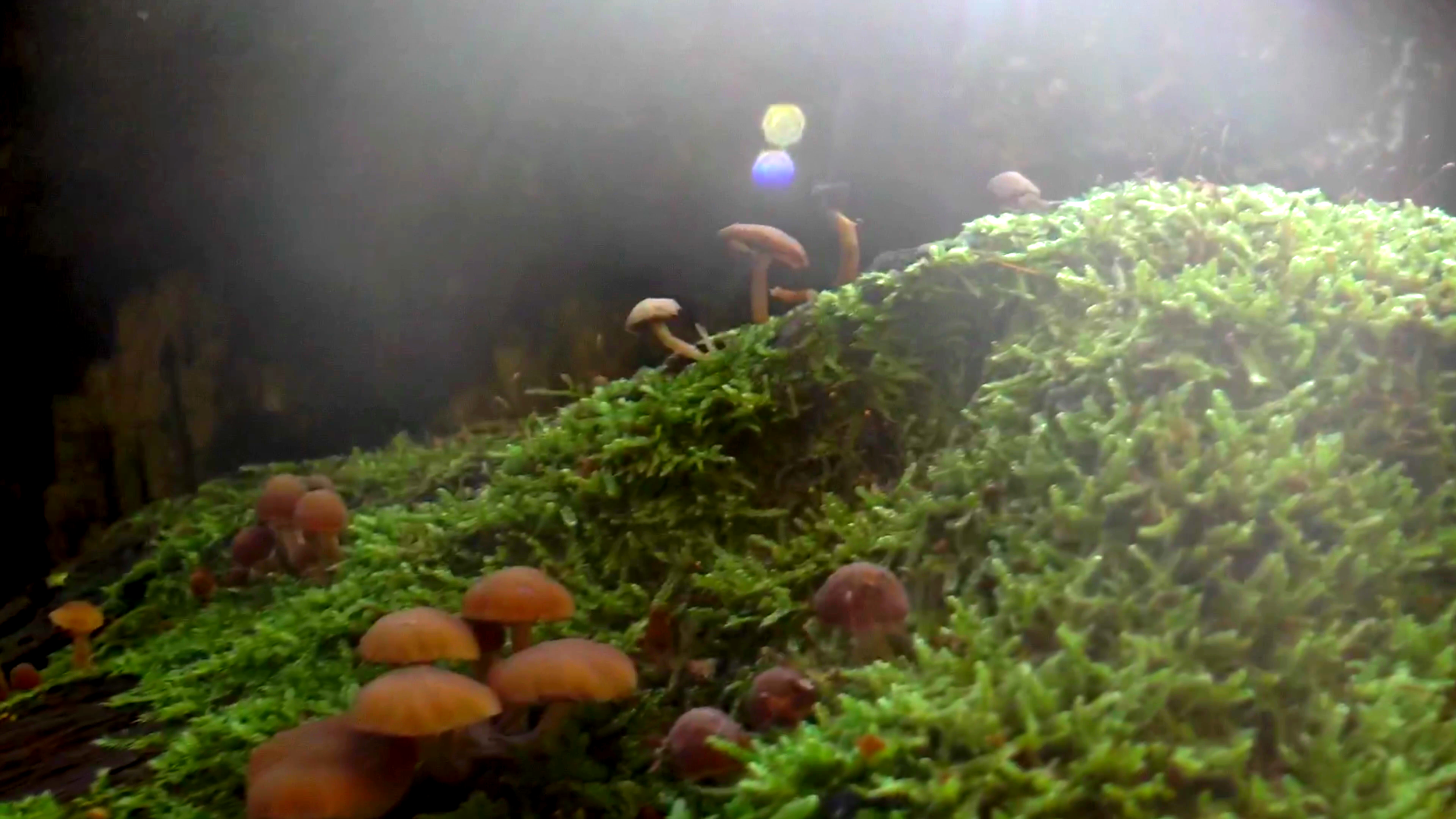
Stopping to notice the smaller things in life, Ashridge Estate in the Chiltern Hills.
Making Adjustments
While the mental benefits are paramount, managing the physical reality of an ageing body is crucial for longevity on the trail. This isn't about giving up; it's about adapting.
Listen to the Body: That little twinge in the knee? It’s not a sign of weakness; it’s a non-negotiable instruction. Ignoring it leads to longer layoffs. We must learn to respect the body’s new limits and needs.
Embrace the Flatter Path: A “friendlier” terrain isn't a failure; it’s a sustainable choice. Exploring river valleys, coastal paths, or gentle rolling hills offers just as much beauty and satisfaction without the joint-jarring impact of relentless mountain descents.
Invest in Good Gear: Older bodies require better cushioning, support, and protection. Upgrading to lighter packs, more supportive boots, and perhaps even using walking poles (which I resisted for years) are smart, proactive steps. They are tools for endurance, not signs of frailty.
Prioritise Recovery: Recovery isn’t a regime; it’s a balance. Listening to the body, easing off when needed, and rounding off a walk with a decent meal and a drink remains one of life’s great pleasures — and, in its own way, part of what keeps us going. - for me anyway !
Companionship: Elvis and the Promise of a Pint
One of the great joys of this new chapter in walking is the company. My constant companion these days is my dog, Elvis. He knows nothing of peak-bagging or Strava segments. His sheer, unadulterated excitement for the simplest walk is a contagious, heart-warming lesson in living in the moment. He sets a wonderful, inquisitive pace that ensures I take time to truly appreciate the surroundings.
And then there's my partner. Living here in Buckinghamshire has opened up beautiful, gentler countryside, especially around the Chiltern Hills where our village borders. She’s not the marathon walker I once was, but she will occasionally join me — a promise of treating her to a glass of wine and a meal after the walk at a nice village pub is usually the secret ingredient. These walks are less about challenge and more about conversation, shared silence, and the simple pleasure of ending a day’s effort with good food and good company. It transforms the walk from a solitary pursuit of achievement into a shared experience of contentment. The destination, now, is not the summit, but the warm, convivial glow of the pub fireplace.
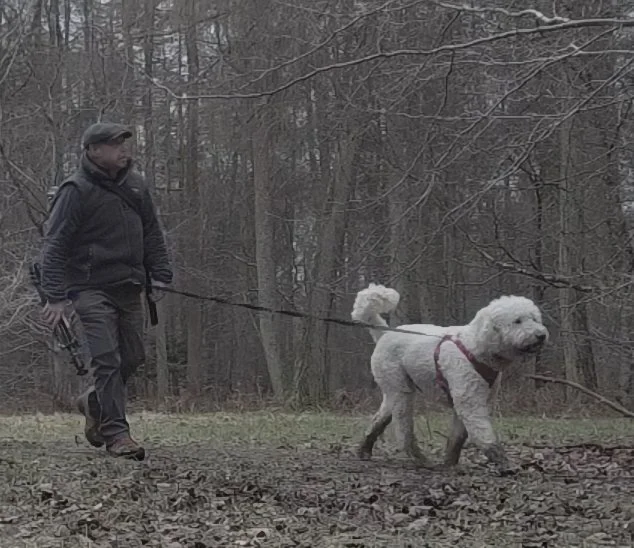
Taking a stroll through Penn Woods in the Chiltern Hills.
The Journey Continues
The story of walking as we get older is not a story of decline; it is a factual story of evolution. It’s the journey from challenging ourselves to the privilege of simply enjoying ourselves and one’s surroundings.
The mountain range of my youth in Herefordshire and Wales will always hold a piece of my heart, a testament to the vigour of my 20s. But the gentle paths of Buckinghamshire and the Chiltern Hills, accompanied by Elvis and occasionally sealed with a pub meal, speak to a different, deeper kind of fulfilment. They are paths of gratitude, patience, and profound, quiet joy.
To those who feel the stiffness in the morning, or whose mind battles their body on the thought of a long walk: don't let go of the boots. Simply change the goal. Trade the peak for the peaceful view, the speed for the silence, and the solo challenge for the shared experience. The trail is still waiting, and its beauty is even richer when savoured at a pace that allows you to truly see it.
We are not who we were. But we adapt, we adjust our expectations, and we carry on doing the things that still bring meaning and enjoyment to our lives.
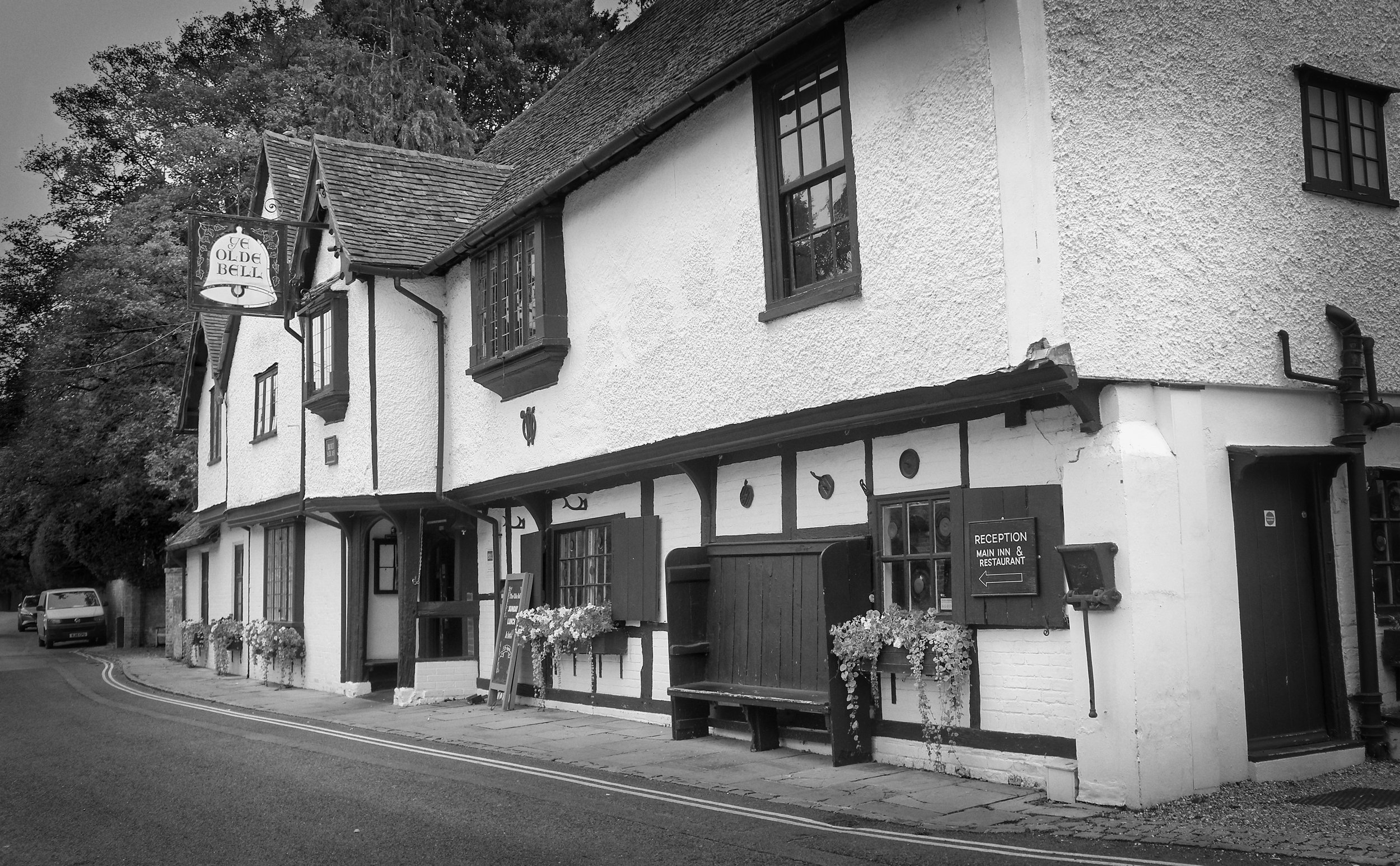
The Olde Bell in Hurley, Buckinghamshire.