Woodland Photography in the Chiltern Hills — Part 4
Three parts in and we've covered six woodlands. Church Wood and Hodgemoor, Penn Wood and Burnham Beeches, Ashridge and Bisham. Six woodlands across four blogs and, as I said at the start of Part 1, over a thousand named woodlands in the Chilterns. I've barely started.
As this series comes to a close there are a few things that apply to all of these woodlands rather than any one of them in particular. Consider this the part where I step back from the trees and say what I actually think.
Getting There
One of the things that doesn't get said enough about the Chiltern woodlands is how accessible they are. Not just for people who live locally — though living within twenty or thirty minutes of half a dozen ancient woodlands is something I'm grateful for every time I pull on my boots — but for anyone within reasonable travelling distance.
The M40 and M4 run straight through Chilterns county. The rail links from London into Buckinghamshire and Berkshire are excellent — Marlow, Beaconsfield, Amersham, Great Missenden, all within reach of the national rail network. Bus routes serve many of the villages that sit alongside these woodlands. You don't need a car for all of them, and you certainly don't need to live here. Burnham Beeches is less than an hour from central London. Ashridge is reachable from three different directions. Bisham Woods sits five minutes from the A404.
These are not remote wilderness destinations requiring days of planning. They are extraordinary ancient landscapes that happen to be sitting quietly within easy reach of one of the most densely populated corners of England. That strikes me as something worth knowing.
Something for Everyone
I photograph exclusively in black and white, and these woods have given me more subject matter than I could exhaust in a lifetime. But woodland photography is one of those rare disciplines that works across almost every style and approach.
If you're a landscape photographer the beech hangers of Quarry Wood and the veteran pollards of Burnham Beeches will keep you busy for years. If wildlife is your thing, Ashridge during the autumn deer rut or the Mandarin ducks at first light on the Upper Pond at Burnham Beeches are the kind of opportunities that justify an early start. Macro photographers have the fungi season in autumn and the woodland floor in spring — wood anemones, bluebells, wild garlic, the extraordinary close-up detail on a piece of bracket fungi or a moss-covered fallen trunk. And if you're out for a walk with a smartphone and no particular agenda, these woods will still give you something worth stopping for.
The seasons are worth thinking about too. Spring gets most of the attention — bluebell season draws people into these woods in numbers that the rest of the year doesn't — and rightly so. But autumn is when I find myself most drawn to the Chiltern woodlands. I shoot exclusively in black and white, and yet the colours of autumn still stop me in my tracks. The warm light through the turning beech canopy, the deep reds and oranges, the contrast between the vivid fungi and the dark forest floor. You don't need to be a colour photographer to appreciate what October does to these woods. You just need to be in them.
Winter has its own rewards. The canopy gone, the structure of the trees exposed, the low winter light hitting the bark at angles the summer canopy never allows. And early spring, before the bluebells, when the first wood anemones are appearing and the woodland floor is coming back to life after months of quiet. Every season is worth showing up for. The photographers who only visit in bluebell season are missing more than they realise.
What the Woods Sound Like
There's something that happens when you spend regular time in these woodlands that's nothing to do with photography and everything to do with why I keep coming back.
You walk in and the noise of everything else drops away. Not entirely — we're in the Chilterns, not the Scottish Highlands, and if you're in Burnham Beeches or Bisham on a clear morning you'll hear aircraft on approach to Heathrow somewhere above the canopy. That sound, a plane passing over an 800 year old oak, is one of those strange Chilterns contrasts that you stop noticing after a while and then suddenly notice again and find quietly remarkable.
But underneath that, or between those moments, there's birdsong. There's the sound of the wind moving through the upper branches while the floor of the wood stays still. There's the crack of something moving through the undergrowth that turns out to be a muntjac, or Elvis, or sometimes both in pursuit of each other. There's the particular silence of a wood in mist that isn't really silence at all but feels like it.
These woodlands make you feel good. Genuinely, measurably good — calmer, clearer, more present than you were when you arrived. I'm not going to dress that up in scientific language about cortisol levels and forest bathing. I'll just say that seven years of regular visits to these places has given me something that has nothing to do with the photographs I've come back with, and everything to do with the time I've spent in them.
One Thing That Needs Saying
I try not to use this site as a platform for complaints, but there's one thing I've watched happen in every single one of these woodlands and I'm going to say it plainly.
Pick up after your dog.
I always pick up after Elvis. I carry it with me until I reach a bin, and if there isn't one within reasonable distance I take it home. This is not complicated. It is not difficult. It is the basic minimum required of anyone who brings a dog into a shared public space that other people, children included, are also trying to enjoy.
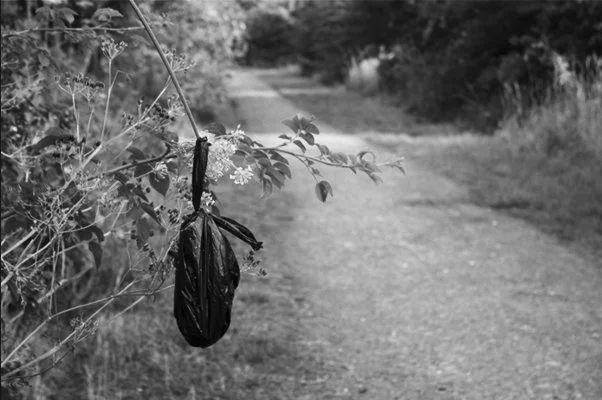
Bagging it and hanging it from a tree branch is not a solution. It is somehow worse than not picking it up at all, and I genuinely do not understand the thought process that leads a person to that decision. These woodlands are ancient, protected, and free for everyone to use. Treat them accordingly.
A Last Word
Six woodlands across four blogs, and the honest answer is that I've only told you what I know so far. Every one of these places is still teaching me something. Every return visit turns up a detail I missed the last time, a section I haven't properly explored, a light I haven't seen before.
That's the thing about ancient woodland. It has been here far longer than any of us, and it will be here long after we're gone. We're just passing through. The least we can do is pay attention while we're in it.
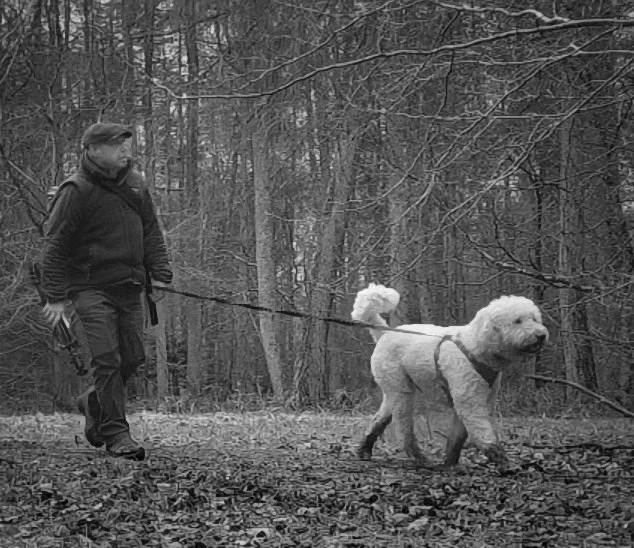
Mark Weekes and Elvis — Chiltern Hills
Elvis, for the record, pays attention to all of it. Just not always to the parts I'd prefer, like the stagnant hidden ponds he always seems to find.
Alongside my rural and countryside photography, the Chiltern woodlands will keep drawing me back — and I'll keep documenting them here on Walking With Pics. There's still plenty left to explore.
Read the full series.